You may recall me mentioning a concrete garden in my last Hamburg post, well today I am going to tell you more about it. I spotted it from a distance on our first visit to Hamburg, and a few of you might have spotted the photograph below in my garden gallery. We didn’t have time that day to explore exactly what it was I had seen, but it stayed in my head as we’d seen there were people climbing up. So on our return a week later I knew I was going to track it down.

The first thing I discovered was that it is a World War Two bunker.
Now in my mind bunkers are usually underground and not that big. Well the Germans did things differently in 1942. Its primary function was as an anti-aircraft tower. It wasn’t that effective at the latter but it was very successful as an air raid shelter for civilians. Built to house 18,000 people during an air raid, it managed to shelter nearly 30,000 during horrific allied bombings in 1943.
It was not the only bunker in Hamburg; more than a 1000 were constructed in the city of which over 600 still remain. None of them though were as enormous as this one.

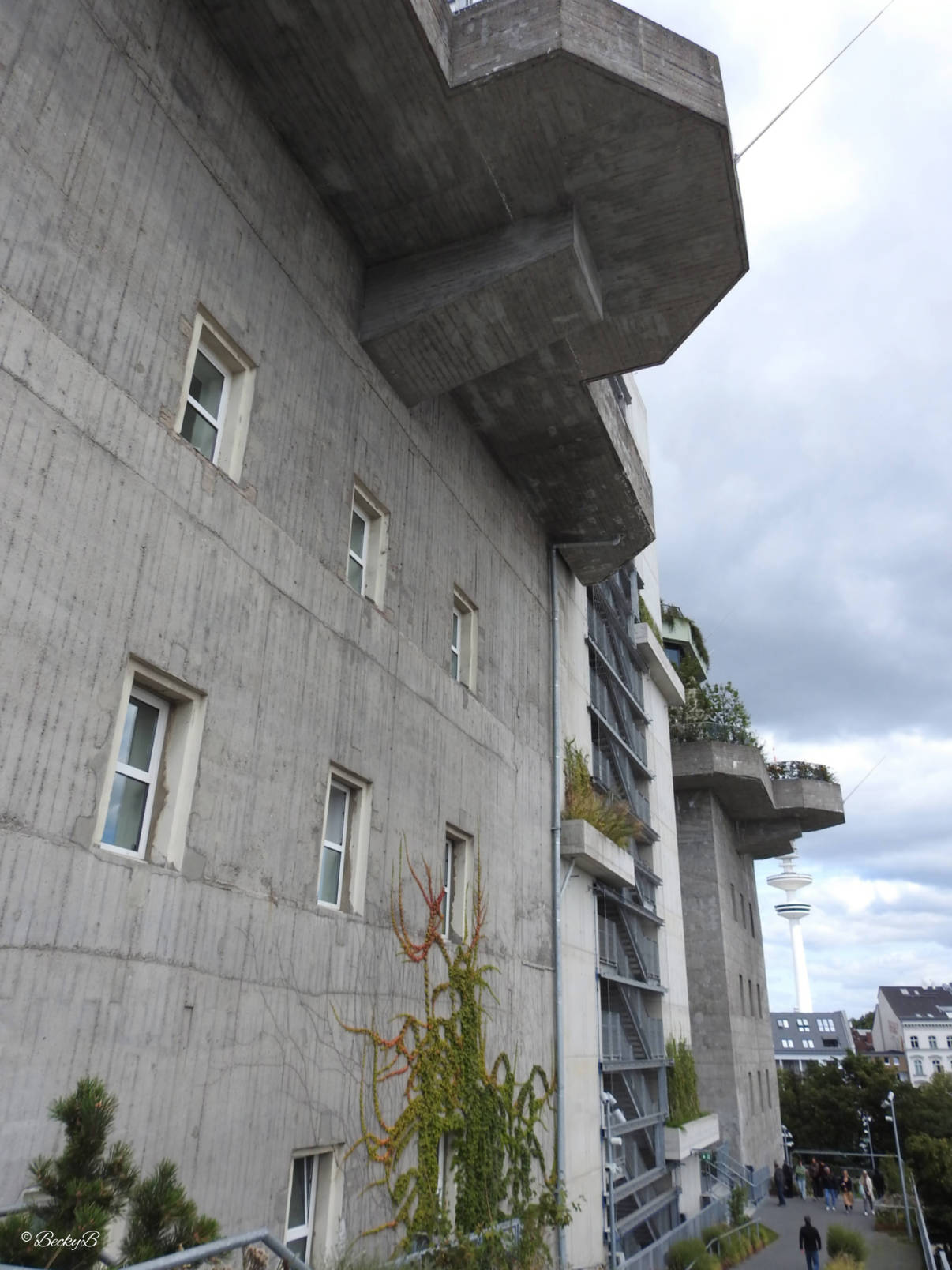
It is one of eight towers built; three in Berlin, two in Hamburg and three in Vienna. This one – Flakturm IV – has 3.5 metre thick walls, was 75 by 75 metres in wide and 35 metres (128 ft) high. I say ‘was’ as it is actually higher these days, but more about that in a moment. The two flak towers in Hamburg were built within 30 days, using thousands of forced labourers. Most of the forced labourers working across Germany during the second world war, 15 million men, women and children at one point, were abducted from other European countries. They endured extreme mistreatment, severe malnutrition and sadly also enemy (Allied) bombing. The labourers were not allowed to shelter in the bunkers they had built.
The bunkers sheltered German civilians, government officials and in the case of the flak towers also the anti-aircraft gun auxiliaries. Thirty five of the auxiliaries in Flakturm IV were underage school children.
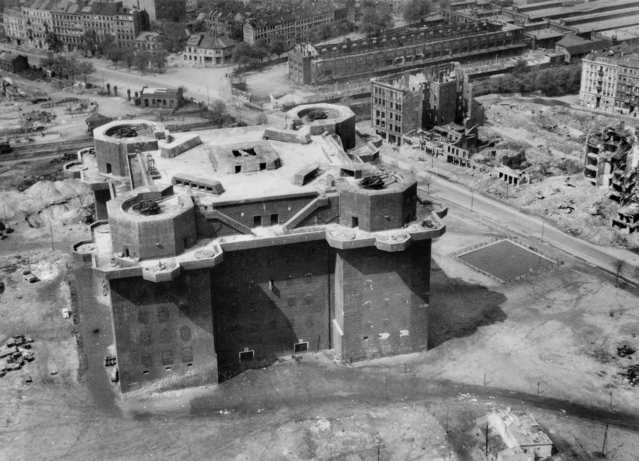
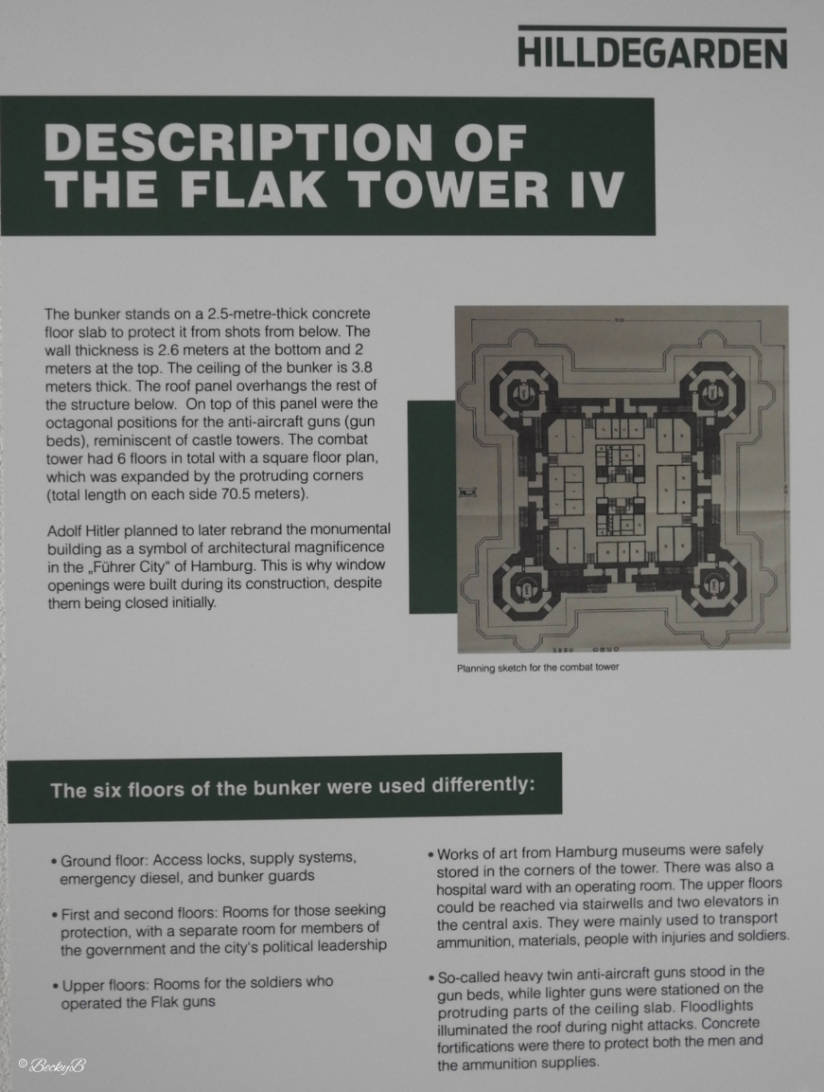
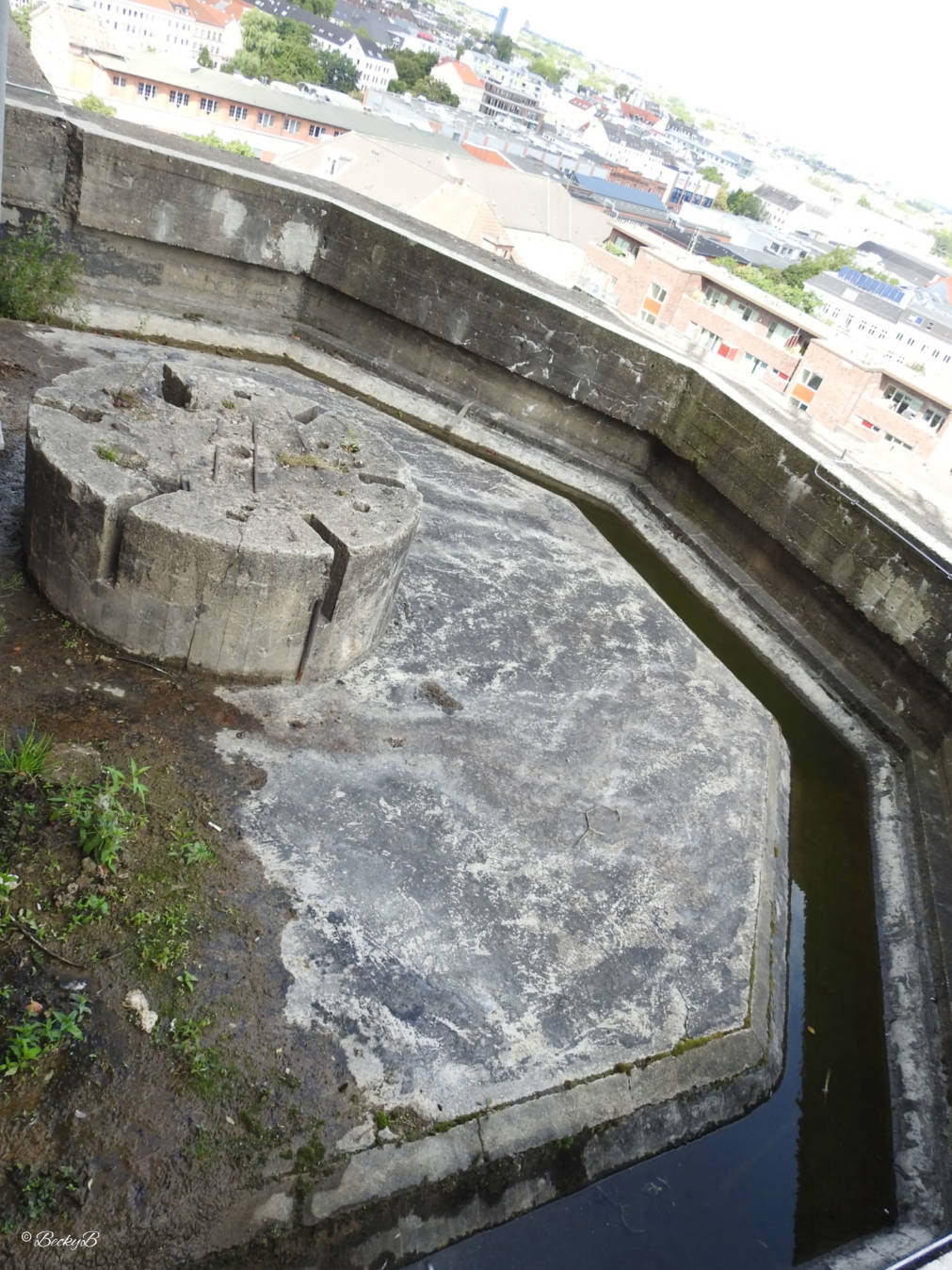
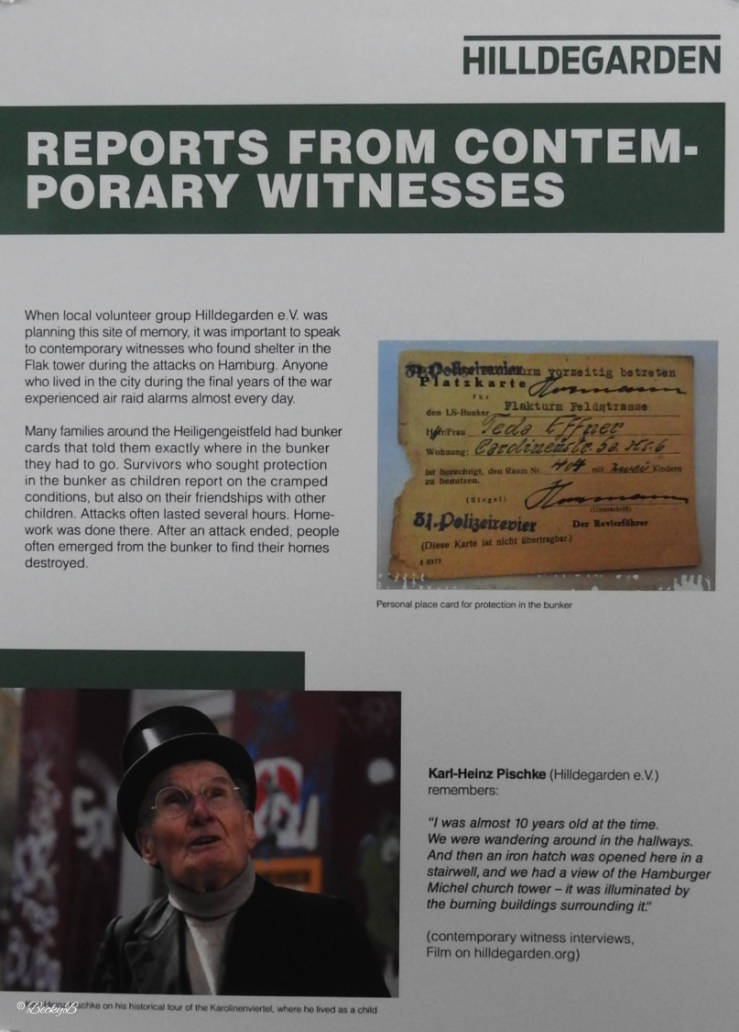


At the end of the war the allies wanted to destroy the towers, but their size and method of construction made that impossible without destroying much of the residential area they were located in. So they remained. Slowly Hamburg began to re-purpose them; their thick walls making an ideal music venue. It wasn’t though just music and theatre that found a home here. The towers had been designed from the start to have a second life as a symbol of German architectural magnificence. Window sections had been created – small tunnel openings with steel screens – so by the end of 1946 48 permanent family apartments had been created. These apartments were in use until 1972.
Then a few years ago REVERB, a Hard Rock Hotel, saw an opportunity to make it more loved by creating a garden with more circa 16,000 plants on top. It might seem a bizarre thing to do but it fits in well with the quirkiness of the surrounding area. The bunker is centrally located in the lively and eclectic Karoviertel district. Hard Rock Hamburg added a few more floors as well for their hotel, and in July 2024 the top floors with the aid of a ‘“Bergpfad” (560 metre long mountain path on the outside) opened to the public. On the first weekend more than 25,000 people visited. It was pretty busy on the Monday I visited in 2025, so guess weekends are still very busy times.
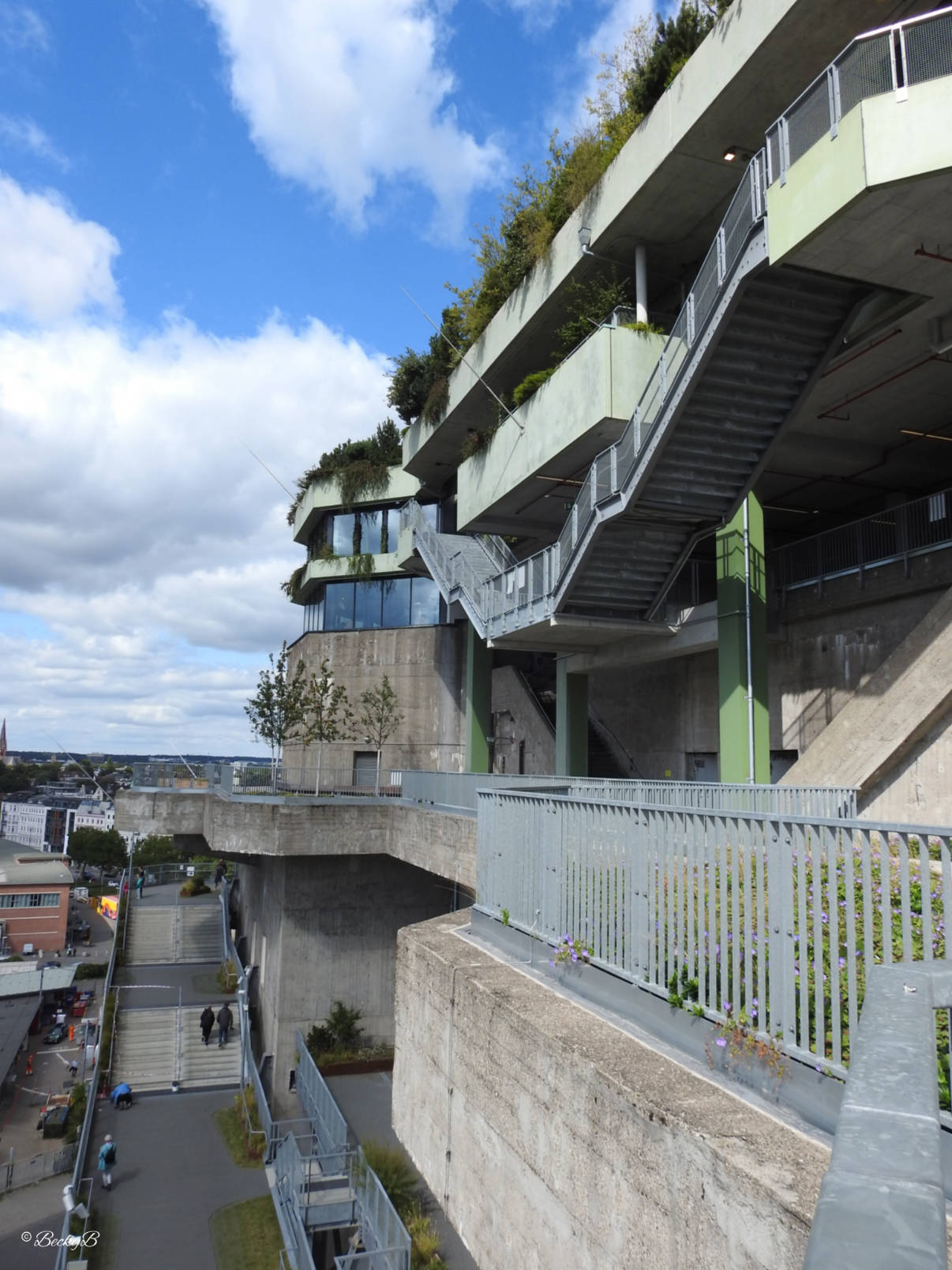


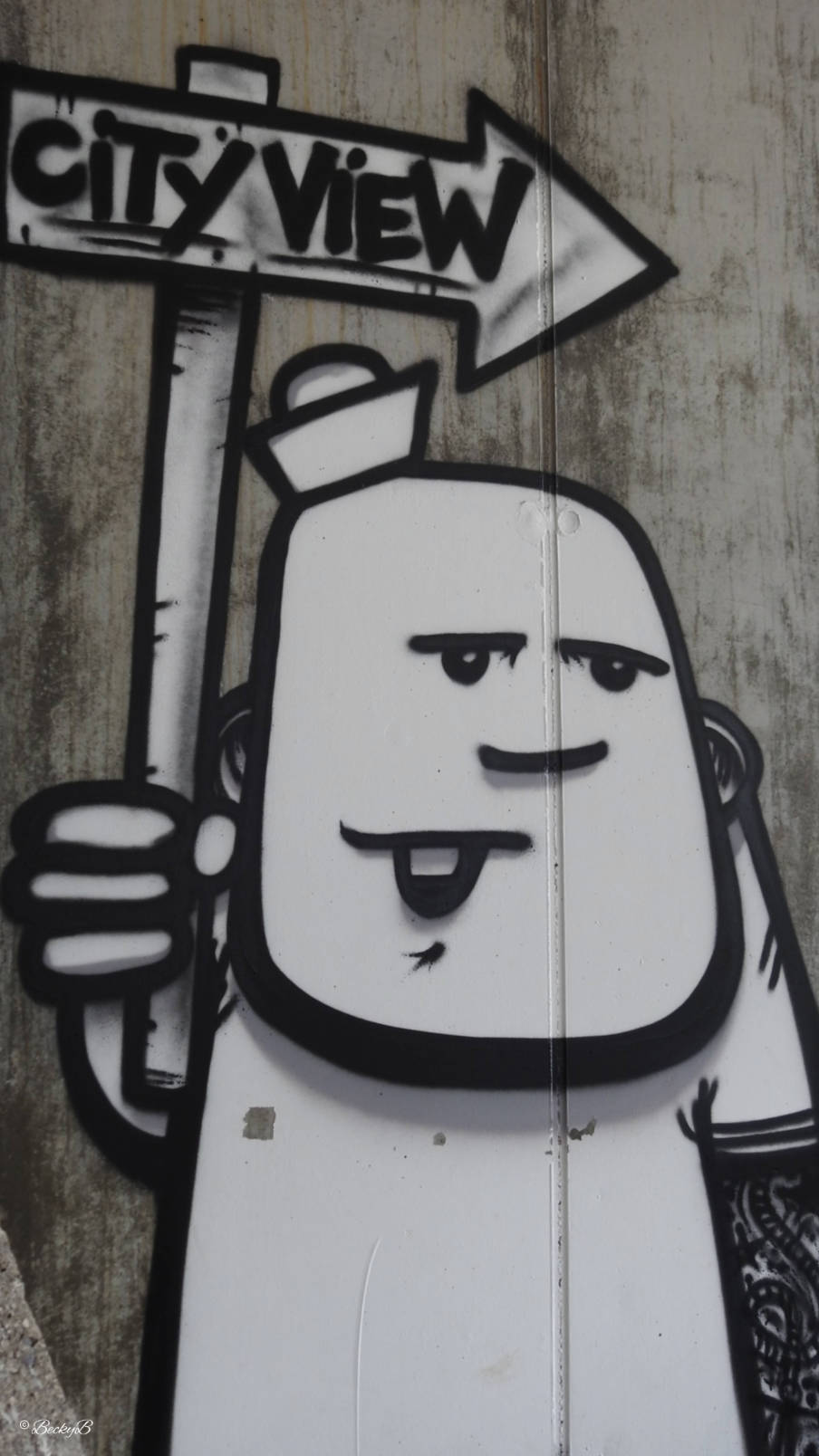
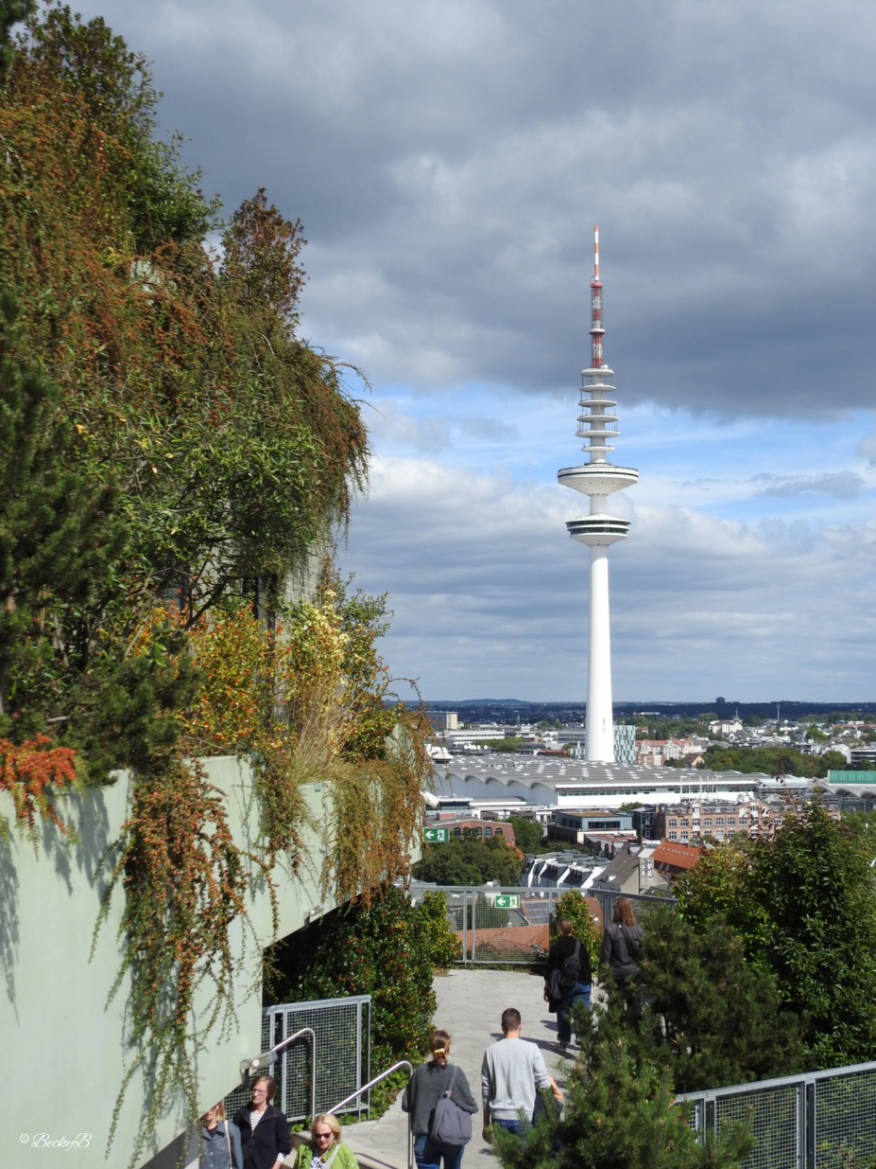
As you can imagine a 58 metre (190ft) high tower offers some pretty fabulous views of the city. Feldstraße Bunker is well worth the climb up and also worth leaving your water bottle by the gate at the bottom. Yup water bottles are not allowed up, and there’s a security person at the gate checking. I left my bottle as did many others on the wall by the gate, and reclaimed it when I returned a while later. An odd and little bit unsettling thing to do, but then I was about to climb the outside of an very unusual building.


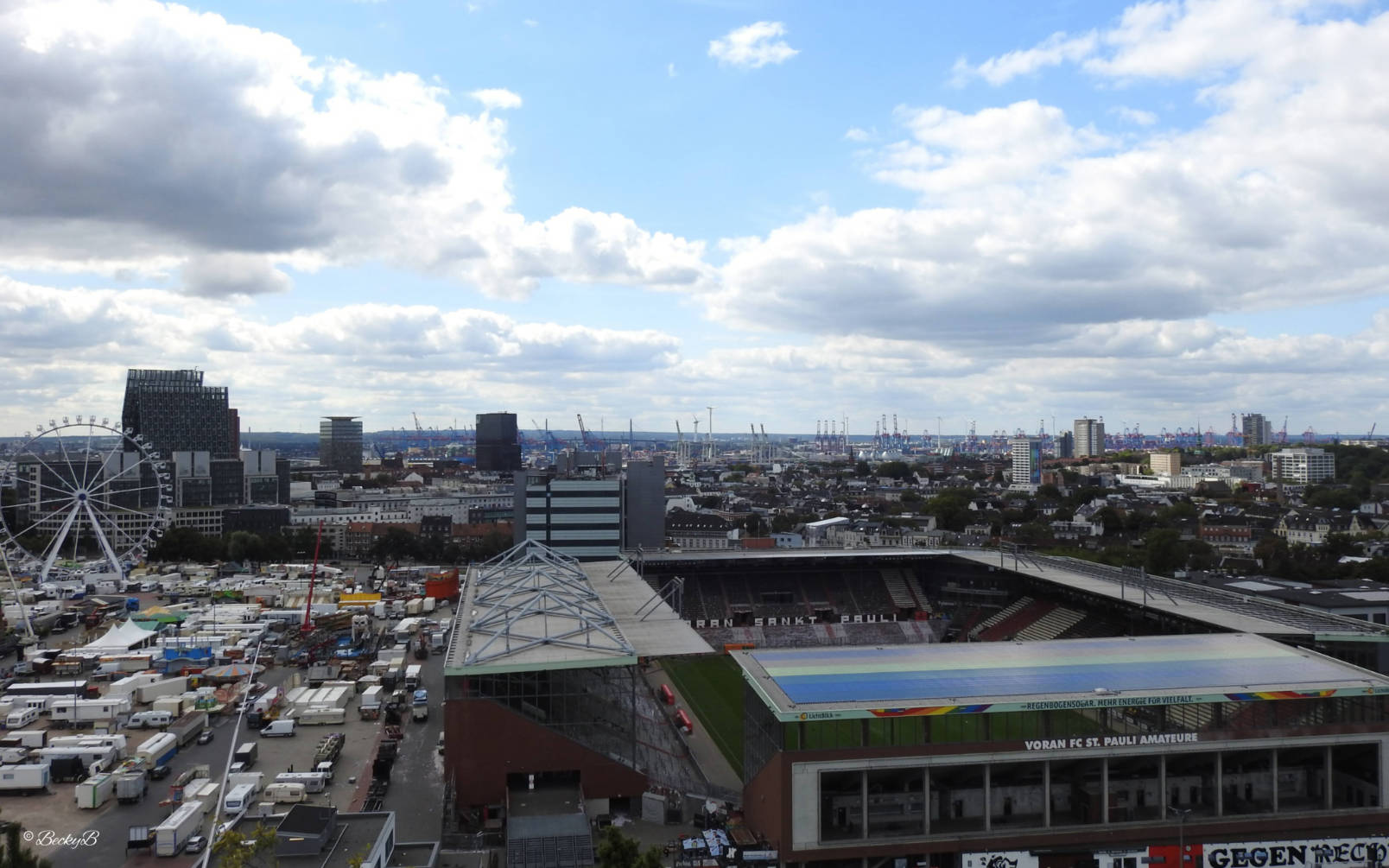
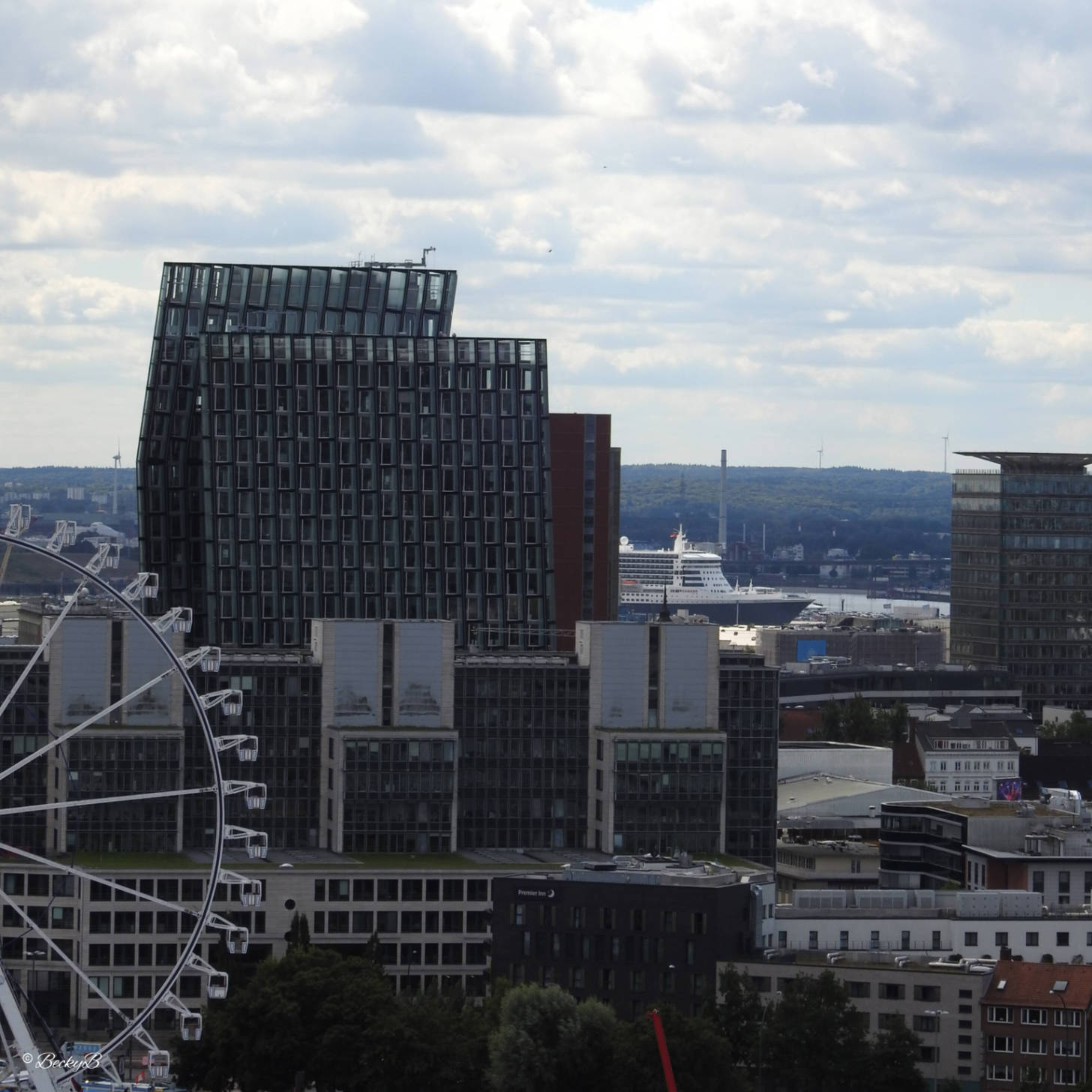
Did you spot the QM2 in the gallery? This was to be the last time I photographed her from land as from here we returned to Southampton where I didn’t disembark and then onto NYC where I didn’t have a chance to photograph her again. I thoroughly enjoyed my QM2 experience, and will certainly be looking to return to Hamburg. It’s a wonderful city and there’s so much I have to yet to discover. If I do return though it will probably be by train or plane; QM2 would be an expensive ferry!
 The life of B
How great that this building, with all its difficult history, has been converted into such a useful and interesting place. Definitely worth the effort to go and visit properly.
LikeLiked by 1 person
I’m so glad I did, and also that I spotted it from afar.
LikeLike
An interesting tidbit of history. I remember reading how hard Hamburg was hit due to the shipping yards. It’s definitely a “unqiue” architecture but the modern bits help soften it. I bet you had to leave the water bottles due to them being a projectile object from that height.
LikeLiked by 1 person
so many places and people suffered, war is not good 😦
and yeah I am guessing that is the main reason but they did allow us to take other items so not 100% sure
LikeLike
I’ve never heard of this before, but what an interesting way of repurposing it, even allowing for it’s sketchy history.
LikeLiked by 1 person
my thoughts exactly
LikeLiked by 1 person
Fantastic post full of great info and images. Thank you so much for sharing them with. us, It is good to learn from history and hopefully some of the awful things will not be repeated again.
LikeLiked by 1 person
thank you for your kind words
LikeLiked by 1 person
A fascinating structure with an equally fascinating history. The views look great but the water bottle ban is odd – it’s after a climb like this that I would want a swig of water!
LikeLiked by 1 person
there are plenty of bars and restaurants at the top – maybe that’s the real reason for the bottle ban?!
LikeLiked by 1 person
Highly likely! Similar to my theory about unreasonable photography bans – they want you to buy the postcards!
LikeLiked by 1 person
certainly put me off buying anything at the top
LikeLiked by 1 person
What a story, Becky. A tale of safeguarding and abusing all in one structure.
LikeLiked by 1 person
I know; until I understood it couldn’t be taken down I couldn’t decide if I was comfortable with its history or not. Certainly makes you think
LikeLike
Thanks for sharing the fascinating information. I’m curious about the water bottle ban. I wonder if it’s so people don’t drop them from the top.
LikeLiked by 1 person
that’s the only thing I could think of, but found it very odd. Can see the odd individual throwing a plastic bottle but proper water bottles didn’t seem to make much sense as we could take our bags up
LikeLike
Fascinating. I mentioned before that I’ve never been much to the north of Germany, so I am totally oblivious of that part of history. Thanks for a teaching moment with great photos, Becky.
LikeLiked by 1 person
so glad you have found it of interest – Hamburg has a fascinating history
LikeLiked by 1 person
What an extraordinary find, Becky! It’s amazing to me that I hadn’t heard about it before when it’s so monumental. So, is it still part accommodation and part hotel as well as the garden on top? Fancy having all those people trooping past your windows! It’s a must see xx
LikeLiked by 1 person
Likewise, for something so enormous you’d think we’d have heard about it. As well as accommodation there are also restaurants, music venues and more inside. As you say extraordinary
LikeLiked by 1 person
An amazing place to hunker in a bunker
LikeLiked by 2 people
extraordinary isn’t it – the size just blew my mind
LikeLiked by 1 person
I can imagine you standing beside the bunker. It would look massive
LikeLiked by 1 person
felt overwhelming standing at the base
LikeLiked by 1 person
It would have been
LikeLike
Another thing to add to our list of things to do and see – thanks for this.
LikeLiked by 1 person
and explore the district too 🙂
LikeLike
🙂
LikeLiked by 1 person