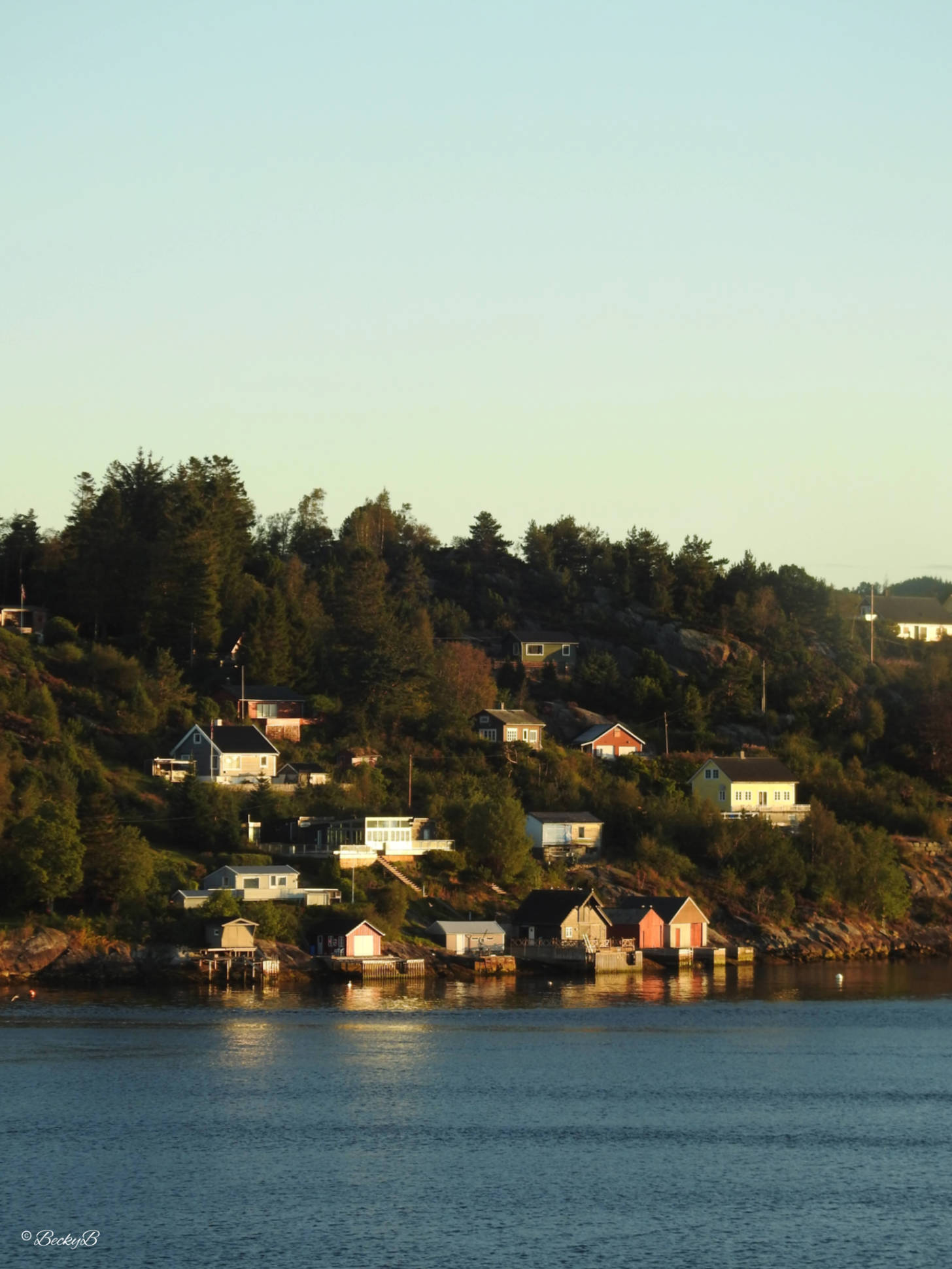
We arrived a few hours after sunrise, but I had been up for a while enjoying the light on the water and surrounding mountains. It’s a beautiful way to arrive in a city.

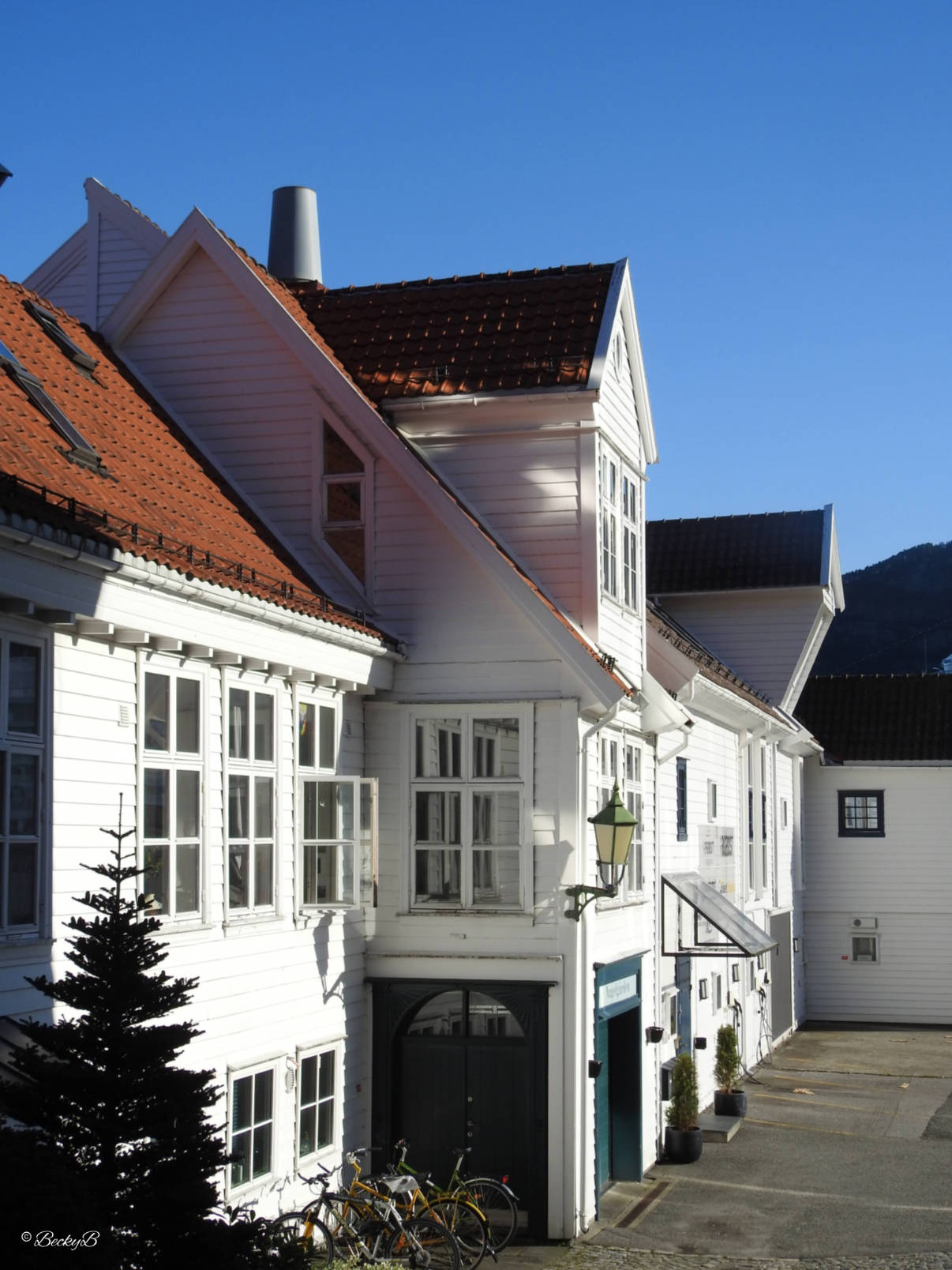
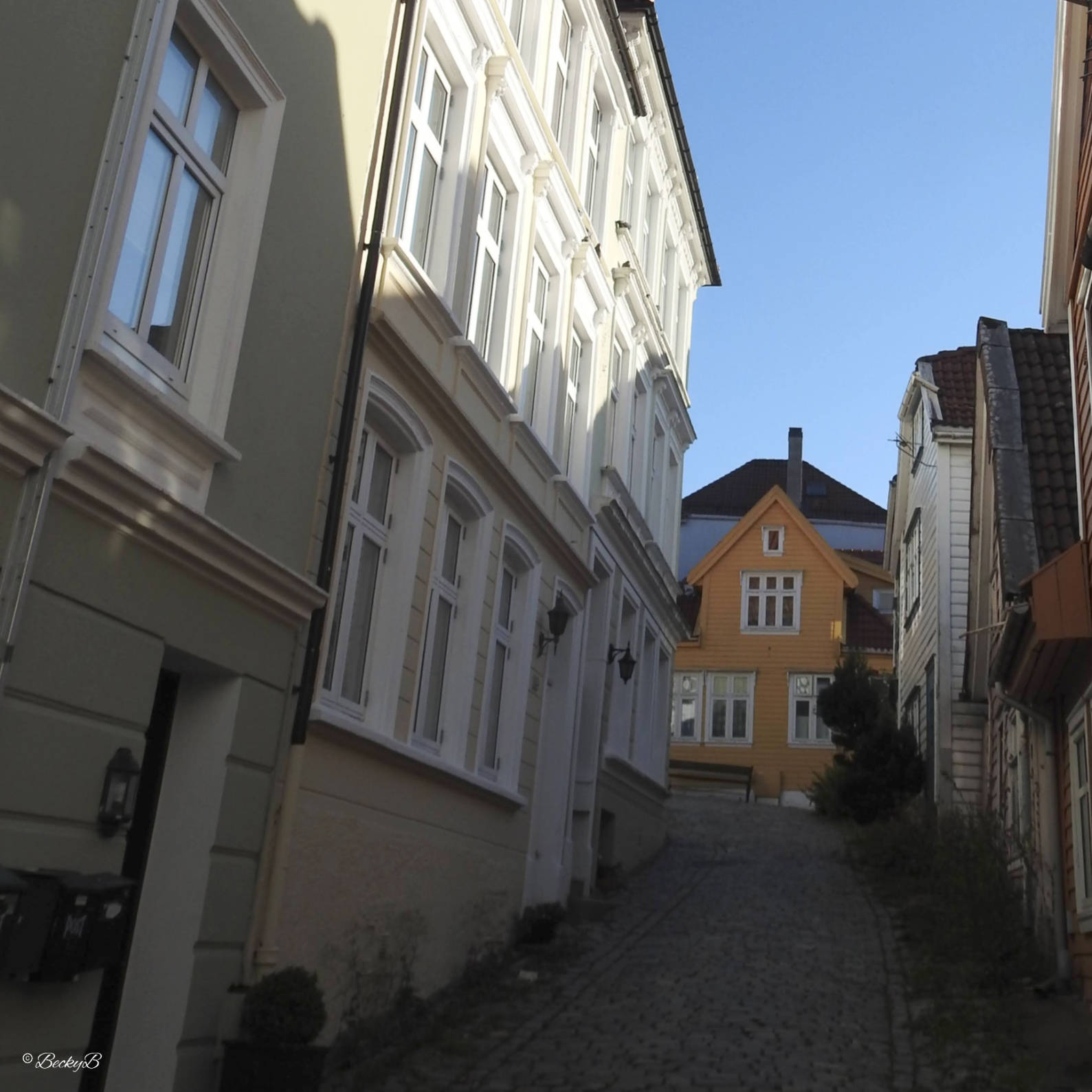
Bergen is Norway’s biggest port and second largest city; part of the city – Bryggen – is a UNESCO World Heritage City and it is that area which probably draws most tourists and the cruise ships here. I am though getting ahead of myself as it was mid afternoon before I explored Bryggen. I began my self organised explorations soon after we allowed off the ship, and following my nose I found myself in Nordnes. A small district, less visited by the tourists and once the centre of power and Norwegian trade in the city. The Germans (Hanseatic league) controlled the other side of the harbour. In the 19th century Nordnes was a hub for sailors, the red light district and undercover activity thanks to all the alleyways but these days it is an upmarket residential area and a respite from all the tourist areas.




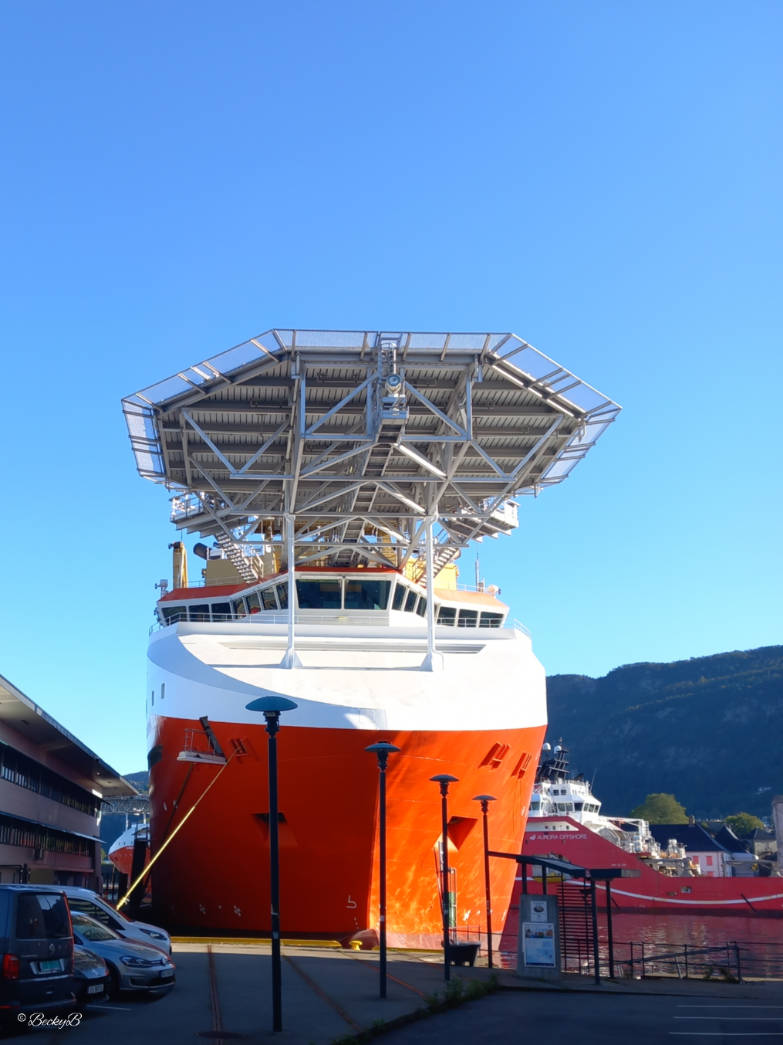
You might have glimpsed in the gallery above (final photograph) the bow of a large ship. This city is full of them. Bergen’s maritime history dates back to the Vikings; it was during the Middle Ages though it became a major international shipping and trading hub run by the Hanseatic League. It is still an international centre today for aquaculture, the offshore petroleum industry, subsea technology and of course the cruise industry.

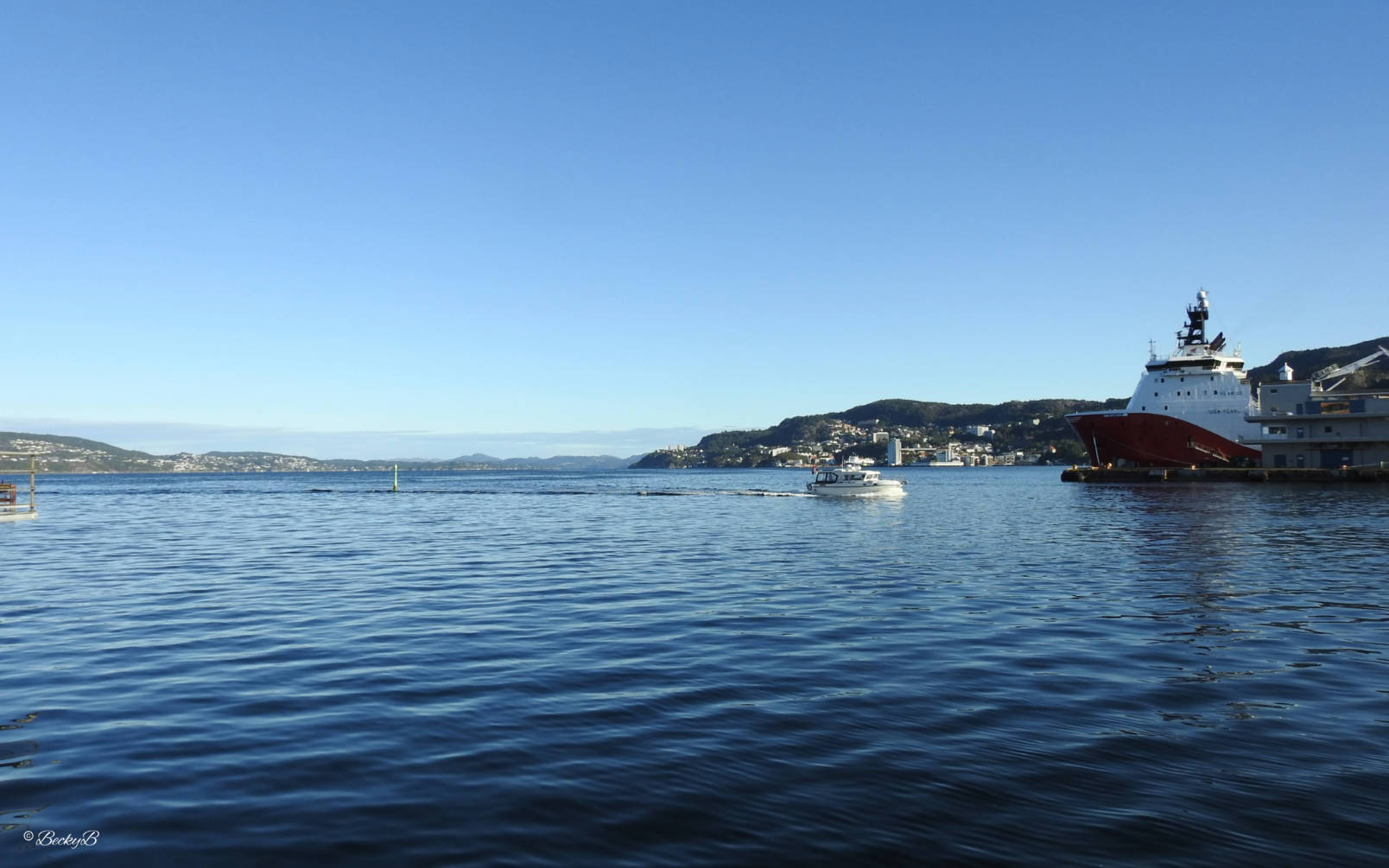

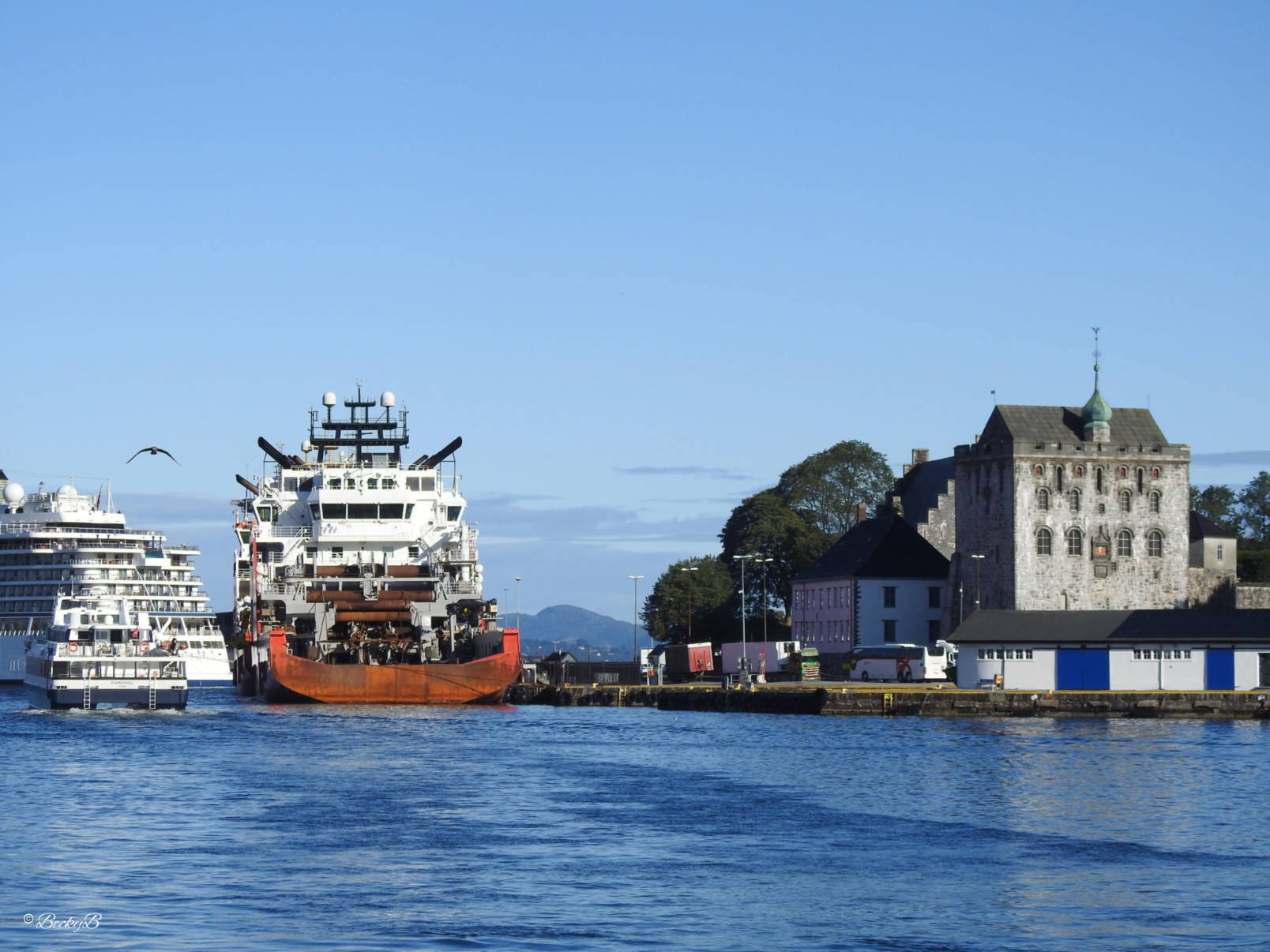
Just out of shot in the last photograph above is Bryggen, and most tourists head there directly. But as I have already mentioned I didn’t get there until mid afternoon. Instead I decided to head up the mountain and avoid the afternoon hikers up there, but that wonderful adventure I’ve already shared with you. So today I am going to follow the tourist route and take you to Bryggen and its medieval wooden houses and commercial buildings on the waterfront.
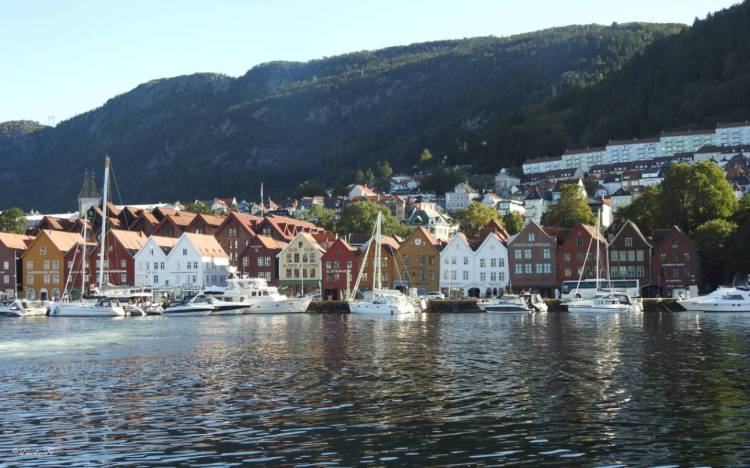
For the first three hundred years or so Bryggen was a Nordic trade hub, but in the 14th century the Hanseatic League established an office here and monopolised this wharf area as well as the export of dried and salted cod. The league were a powerful and dominant confederation of merchant guilds and towns in Northern Europe, who influenced (controlled?) the region’s economy and politics from the 13th to the 17th century. It wasn’t until 1754 that the Norwegians finally reclaimed the wharfs and area for themselves. The area was much larger than it is today, but multiple fires over the centuries have shrunk it. In 1955 the whole area was almost abandoned after yet another fire, but fortunately it hung on until the 1970s when the area was reinvigorated.


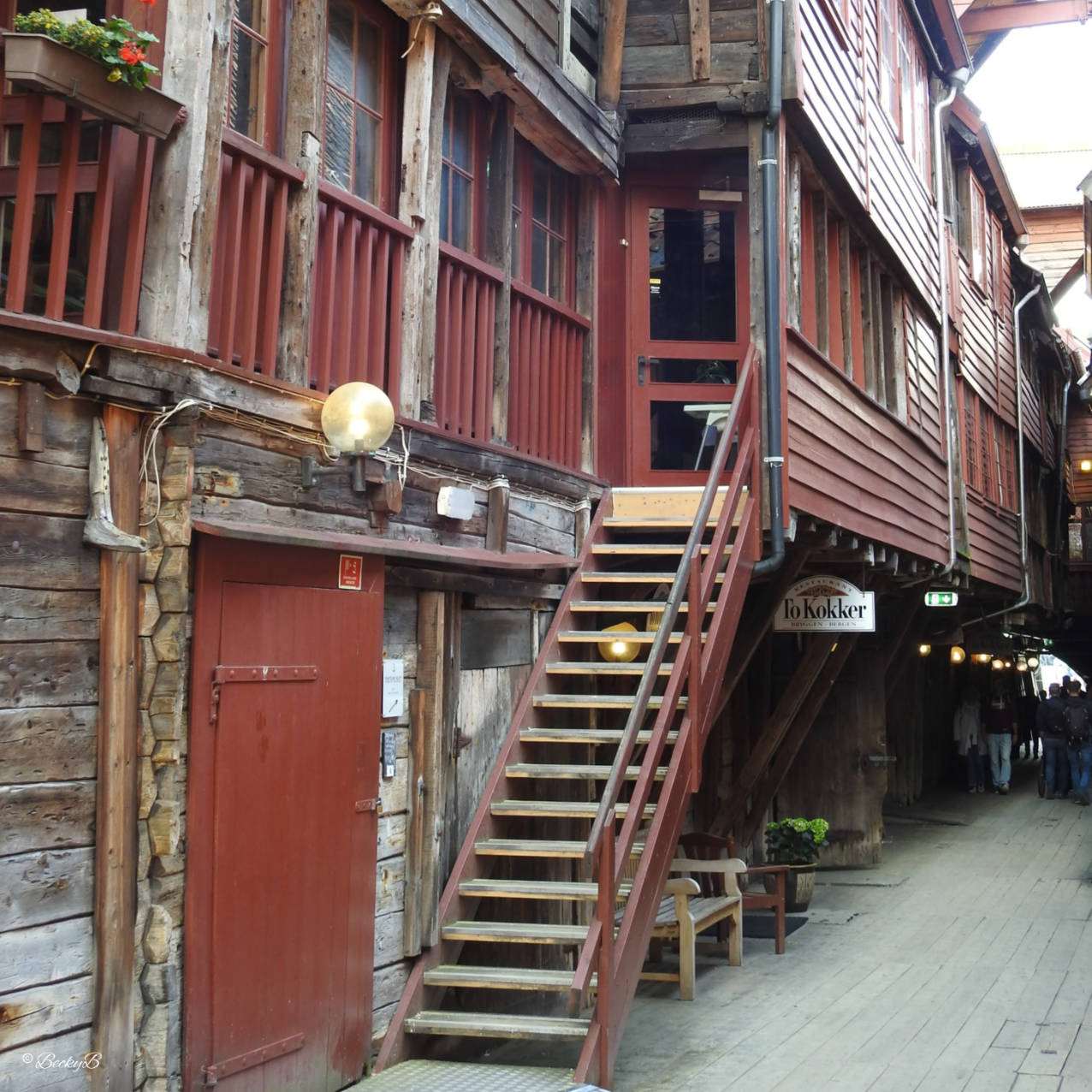

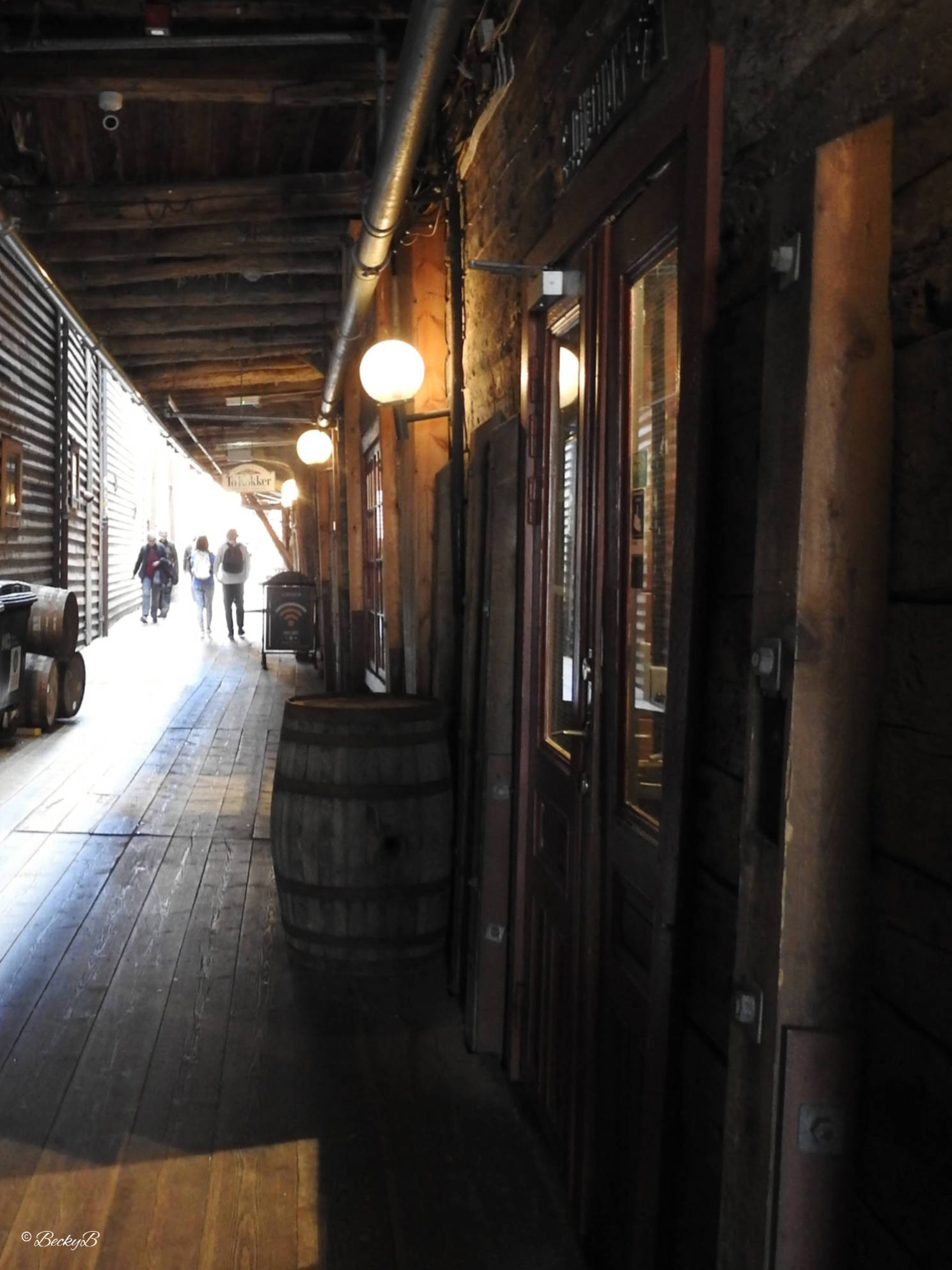

It was a fascinating area to explore and very photogenic but it is a really tiny area. This makes the number of fellow tourists completely overwhelming. Afternoon visits of Bryggen & the funicular are best avoided!
After strolling up and down the few alleys which remain and taken a few photographs from the waterside, I was off elsewhere. First I explored the streets behind Bryggen. For me they were just as interesting.

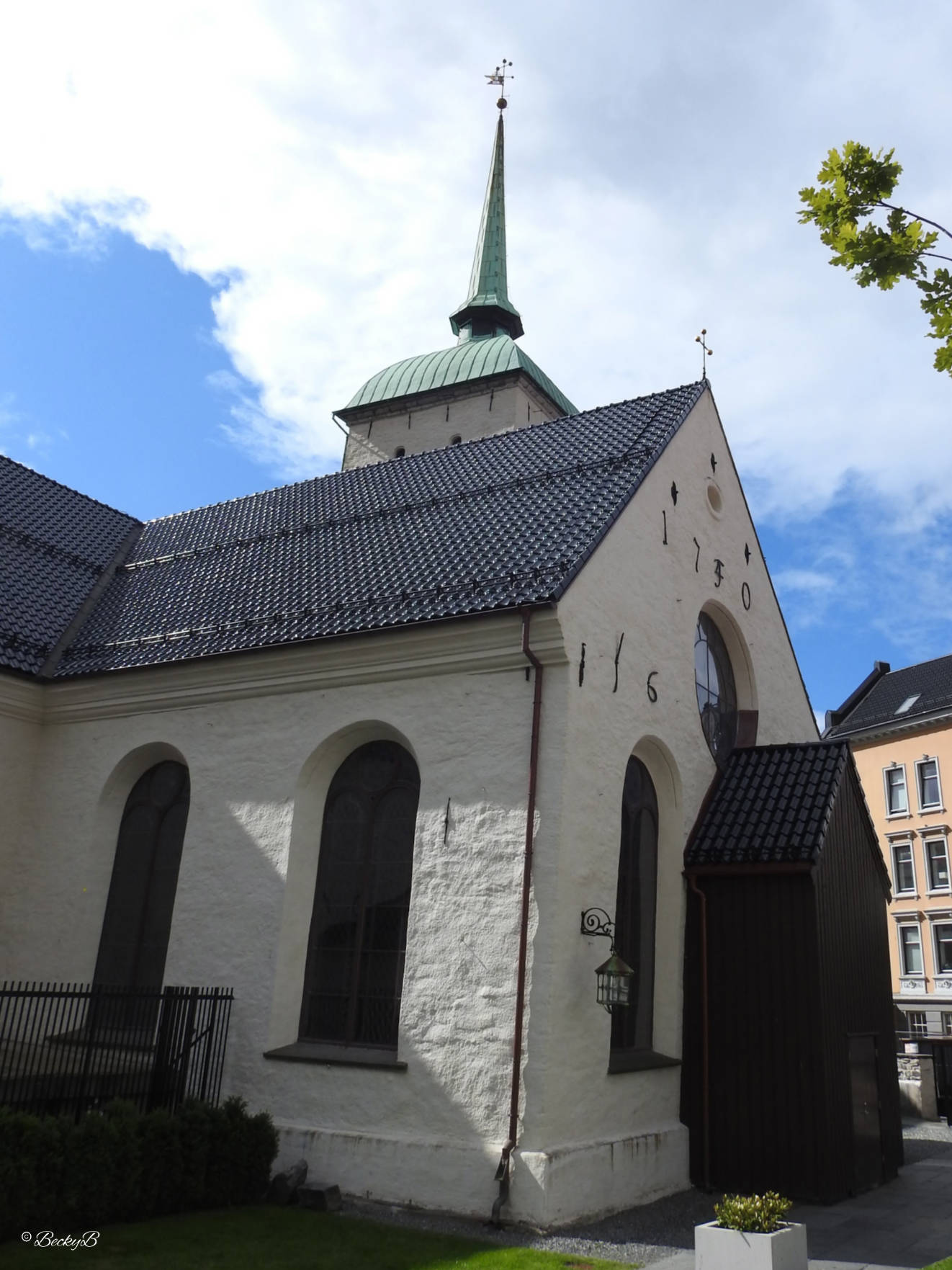
Next it was time to towards some of the few medieval buildings not made of wooden. The stone churches. But even these were too close to the tourist crowds.


So I kept on walking, soon losing most of the tourists behind me and found myself in an intriguing courtyard. A farm? A home? Nope, it is a leprosy hospital – St. Jørgen’s. The hospital has been here since the 15th century, although these buildings date from the 18th century. The last patients were admitted in 1896, of which two were still here in 1946 when they died.
St. Jørgen’s was not the only leprosy hospital in Bergen as the city had the largest concentration of patients living with leprosy in Europe, and consequently, with its three leprosy hospitals, became a centre of research.
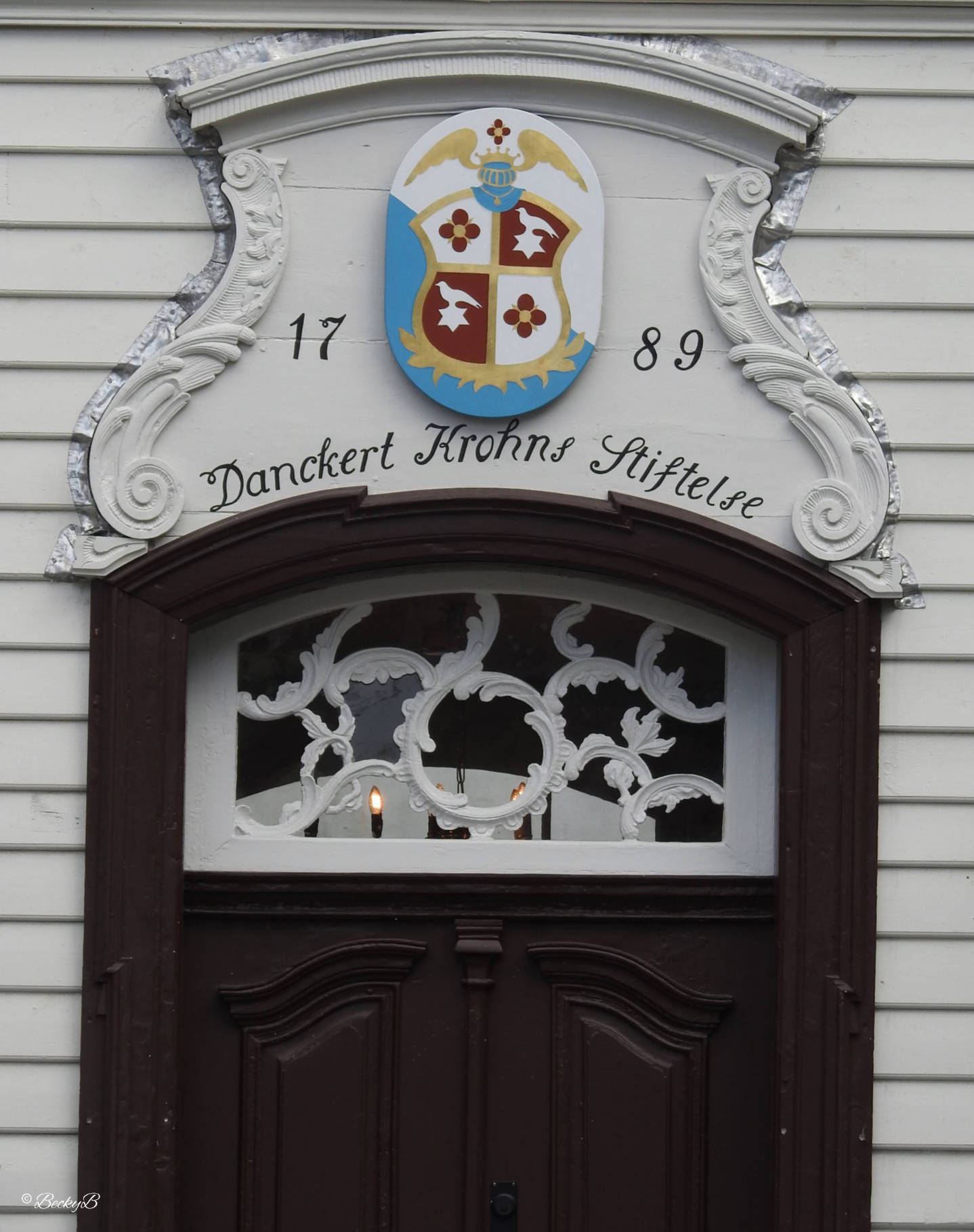

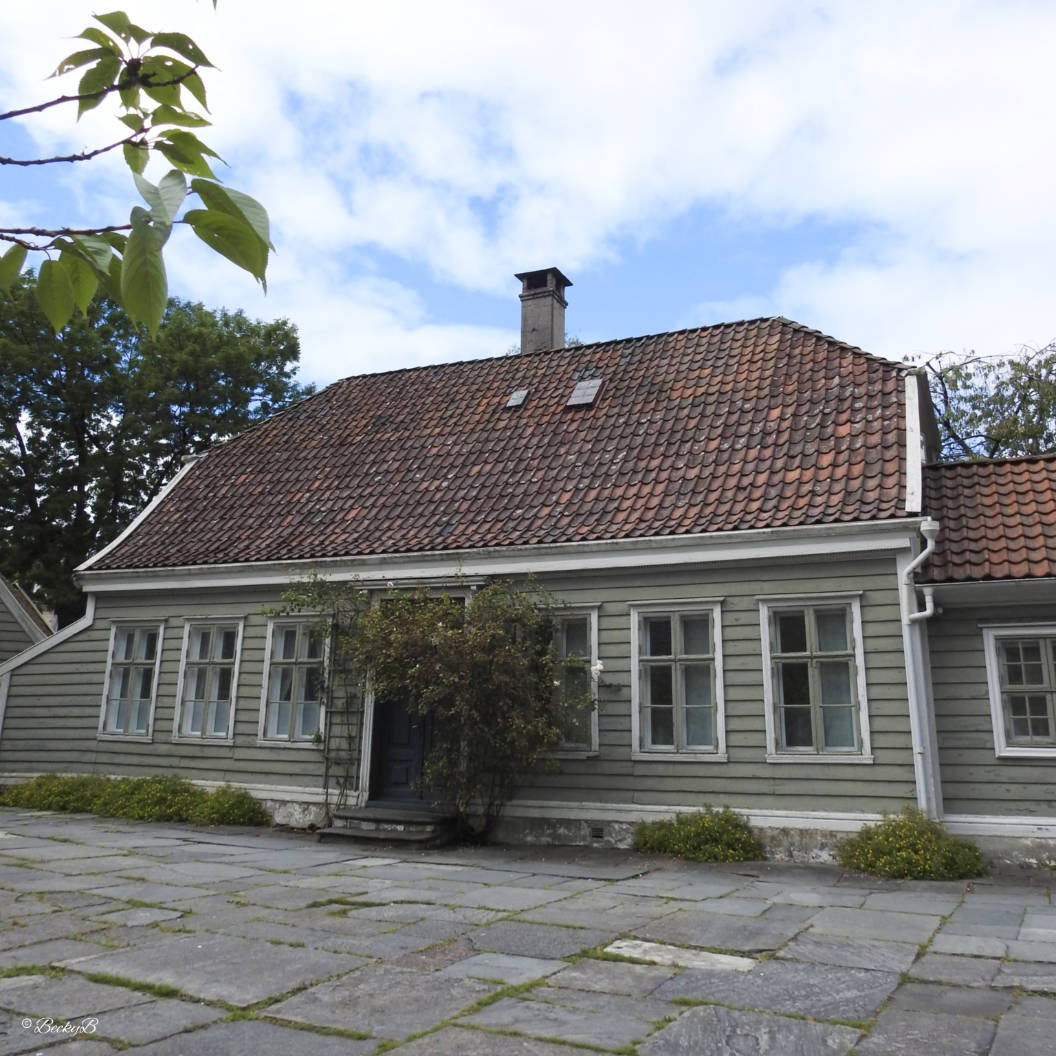

It was a Bergen resident and doctor – Gerhard Henrik Armauer Hansen – who identified the leprosy bacterium and thus became the first to identify and describe a bacterium as the cause of a chronic disease. It was also his work that identified it was an infectious disease and not hereditary. It was a disease that came with social stigma and for many years those with it were banished from the main population to islands or to hospitals in remote places. This hospital however is right in the middle of Bergen, and residents were (at least in later years) allowed to visit family and friends from here. It didn’t feel isolated, and was a fascinating piece of history to have stumbled across. And for those who are wondering; leprosy is no longer a public health problem globally. It hasn’t though been eradicated and there are still around 200,000 cases per year.
 The life of B
You did well to plan your visit ahead of time. It makes a difference knowing what will work best. And we usually find we don’t have to go far to leave the busy areas and find nice places which are a bit quieter.
LikeLiked by 1 person
Mornings are definitely better too 😉
LikeLike
What an interesting place, and well done for exploring the back alleys- I always used to search out places off the beaten track
LikeLiked by 1 person
Great minds think alike!
LikeLiked by 1 person
😄😄
LikeLiked by 1 person
What an interesting post about a place I have never heard of. I love that you get off the beaten path!
LikeLiked by 1 person
Glad you enjoyed it, and I love getting off the beaten track 🙂
LikeLike
Nice tour Becky. It’s usually rewarding to walk a bit from the tourist traps to find lots of things equally interesting. The leper hospital was a good find and a fascinating bit of history.
LikeLiked by 1 person
I know people miss so much if they don’t get sidetracked at least once in a place
LikeLiked by 1 person
Very attractive. It’s like everywhere though isn’t it – walk a few hundred yards form the carpark / main tourist drag and you lose most people!
LikeLiked by 2 people
Incredible how people don’t explore but also such a relief!
LikeLike
I know!
LikeLiked by 1 person
Lovely photos Becky. I have very few of Bergen from my visits. I arrived and left on the ferry from Newcastle / Tynemouth. It sounds very much like poor Venice now, too many huge cruise liners and too many day trippers for comfort. I’m sort of glad that I did a lot of my travelling when places were quieter.
LikeLiked by 1 person
I wish that ferry still ran, as be a fun place to visit outside of the tourist season.
LikeLiked by 1 person
We used to live in Bergen for 3/4 of a year and loved it. As you describe it, it’s lovely, has nice pubs and restaurants, lots of culture, and beautiful shops. A problem is the tourists in summer, just too many. Kb knew Bergen 50 years ago, well, like everywhere, it was much more genuine. It’s poshed-up quite a bit.
Happy weekend
The Fab Four of Cley
🙂 🙂 🙂 🙂
LikeLike
Can understand the tourist issues. I was there in late August, and just overwhelmed in places, so goodness knows what it is like mid summer. Not surprised to learn it has been gentrified. Envious you lived there
LikeLiked by 1 person
I was brought up in Scandinavia, my wife is Norwegian, and we had a stuga (a summer house) in the North. So we have a strong connection to Scandinavia.
LikeLiked by 1 person
I’d love to visit the north – I have a friend up there. One of these days I will get that far.
LikeLiked by 1 person
We’ve several times talked about visiting Bergen on one of the mini-cruises that used to sail from Tyneside, but never got around to it and I think those cruises haven’t operated since the pandemic. It does look lovely and I’m glad to hear there are places where you can lose the crowds. The leprosy hospital looks like a fascinating find!
LikeLiked by 1 person
Hope you make it there one of these days, such a fabulous place.
LikeLiked by 1 person
Lovely!
LikeLiked by 1 person
This was a great inspiration for me as a plan to trip there
LikeLiked by 1 person
you’ll love it, such a lovely city
LikeLike
I know Bergen is not a little town I still keep looking at your (beautiful) photos and expect my Bergen friends to pop up in them. One particular one, as he is originally from South India.
LikeLiked by 1 person
wouldn’t that have been amazing if they had been in my pics!
LikeLiked by 1 person
Yes, a less than 280.000:1 chance!
LikeLiked by 1 person
Norway had never been particularly on my radar, but you have made it a tempting destination. And tourists? We went to a village in Alsace, one of Les Plus Beaux Villages de France, and it was HEAVING. But we took ourselves to a parallel street to the main one, and lo! not a soul in sight! I’m glad you had the same experience.
LikeLiked by 1 person
It’s definitely worth considering for a trip – I loved it
LikeLiked by 1 person
Fabulous photos, Becky! It all looks so very clean and… Nordic! I think I sailed into Bergen many long years ago, on my one and only North Sea crossing, from Tynemouth on a ferry. We were only passing through and I don’t remember it at all so thanks for the updated version xx
LikeLiked by 1 person
Maybe time for a return trip?!
LikeLiked by 1 person
Another fabulous wander about Becky 😀 I must agree about going to the places where tourists don’t congregate. Not only is the time spent less crowded but the food and drinks are cheaper and so authentically tasty.
It was good to go back to the main centres as well to experience the life where life can be a be more of a hustle and bustle
LikeLiked by 1 person
so true 😀
LikeLiked by 1 person