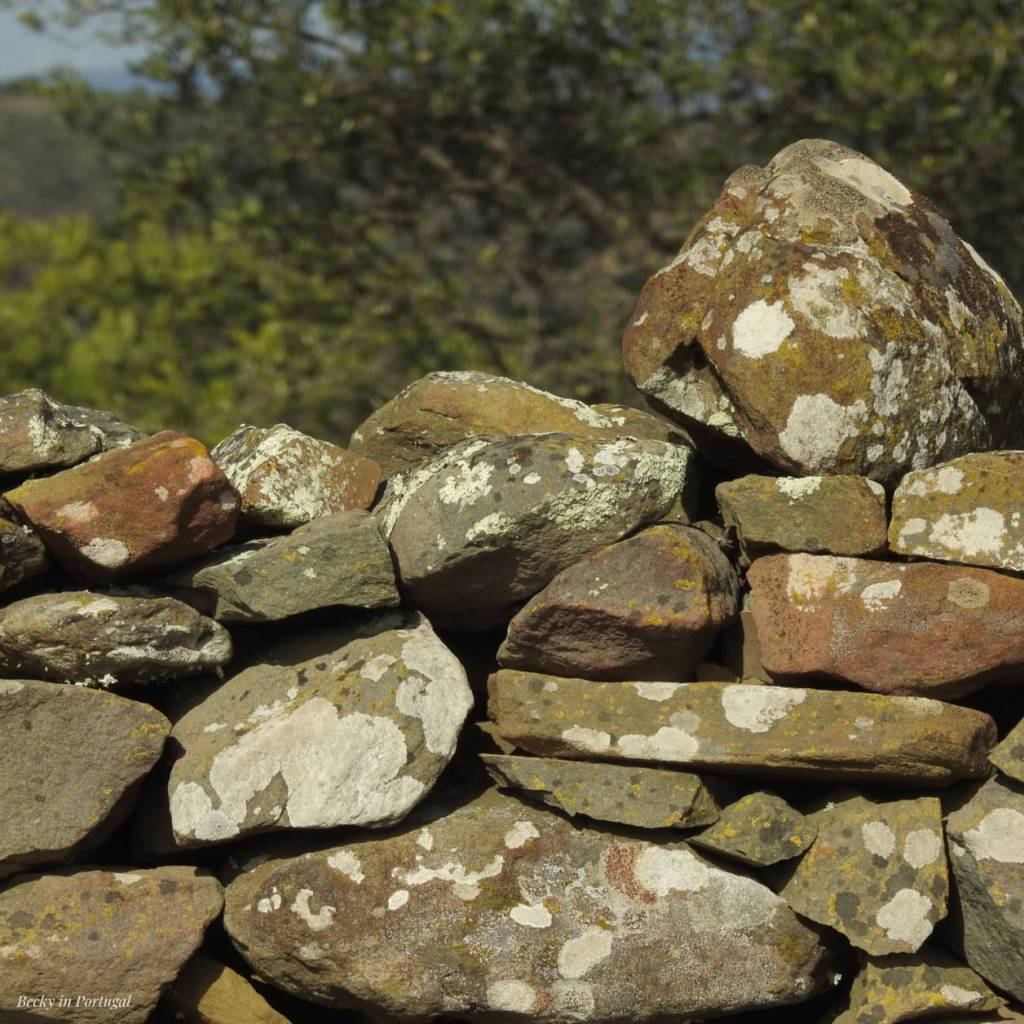
What I hadn’t realised until I was attempting to identify the lichen in my pictures, is that lichen are not a single species. Each one is at least two species, usually a fungus and an alga working in partnership. The fungus provides a protective home and the alga produces the sustenance. That is probably why they come in a range of odd shapes and varieties, and why I have failed to identify most of them!
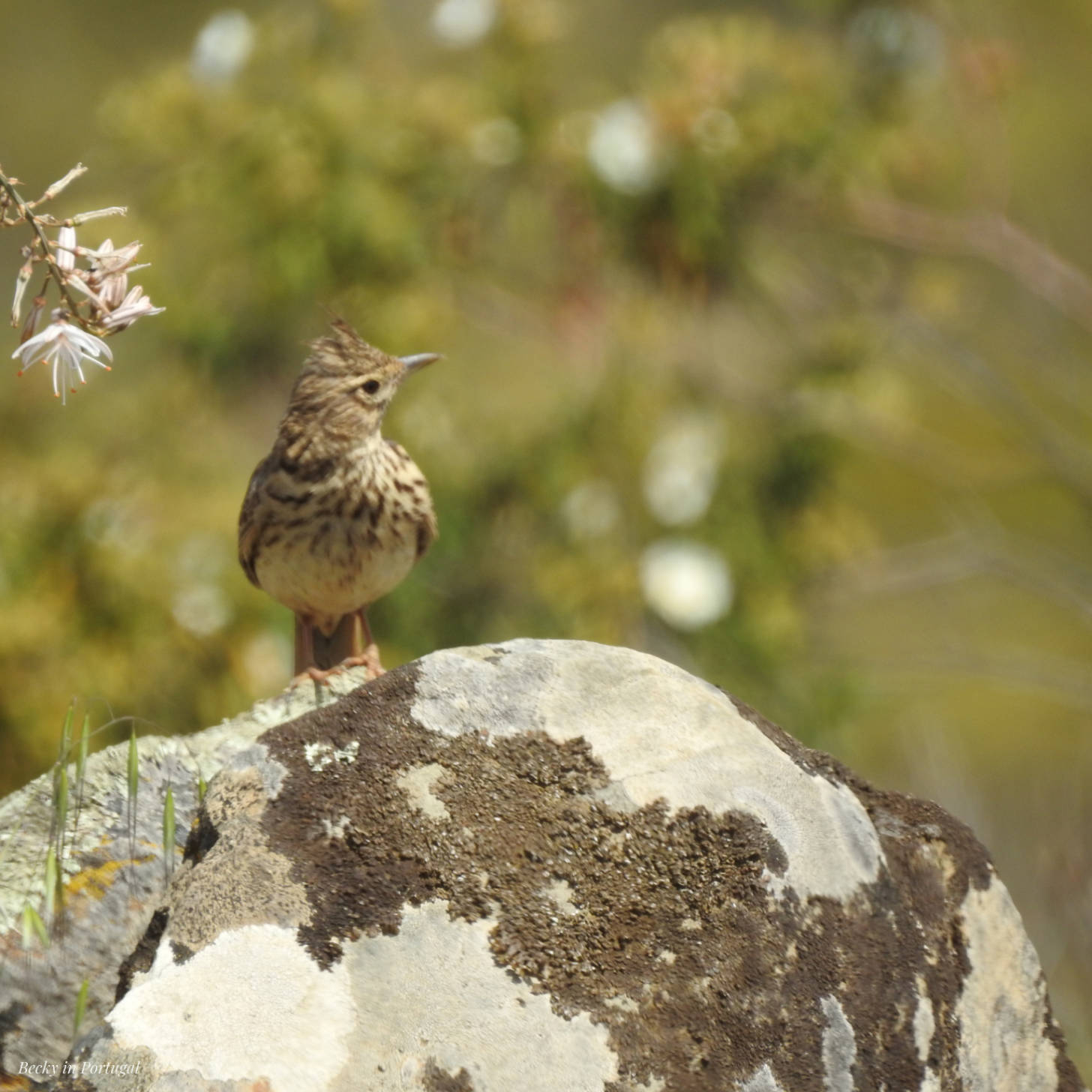
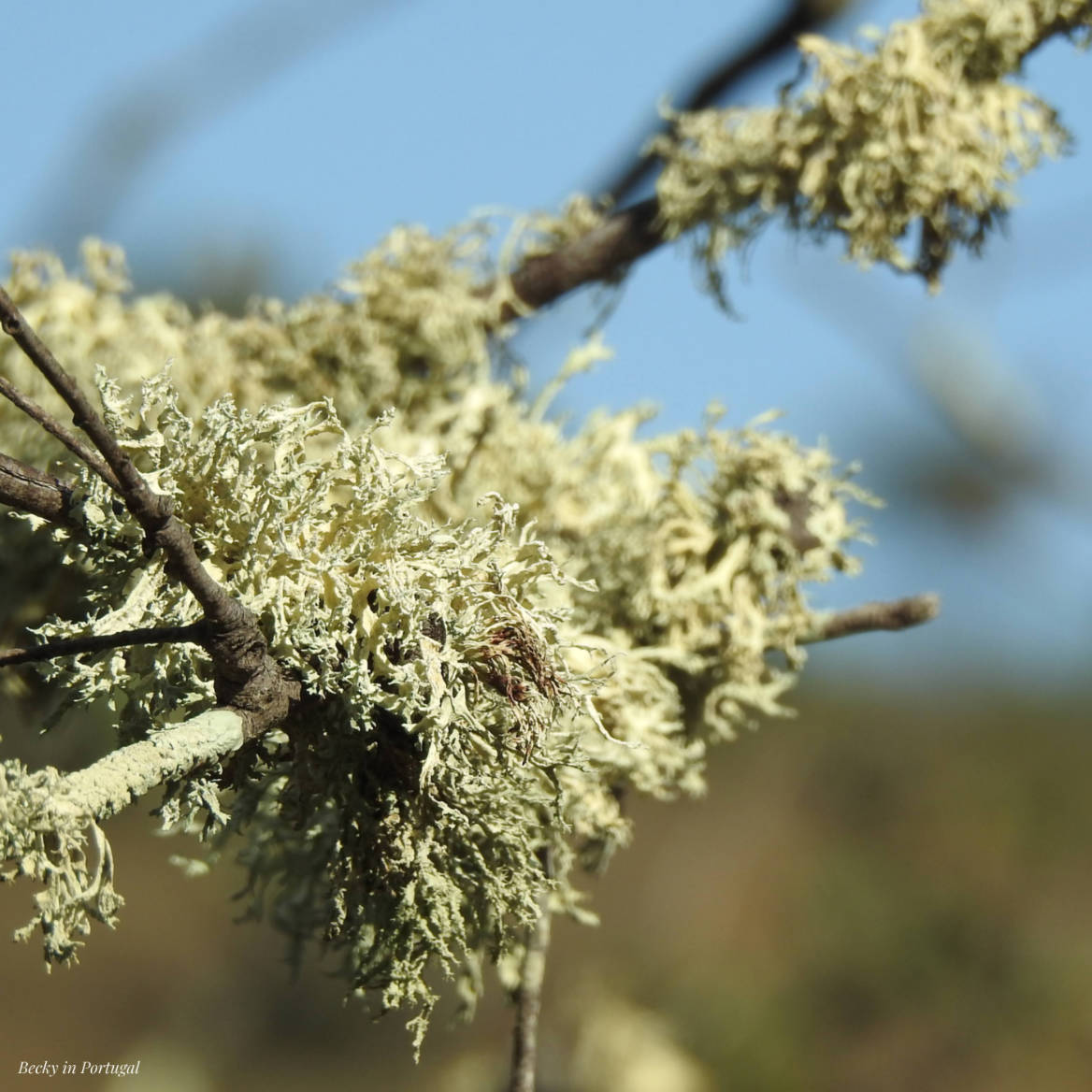

Lichens are sensitive to environmental change and grow slowly, with many requiring undisturbed habitats and clean air. Unsurprisingly therefore they can be found on nearly all the dry stone walls and abandoned buildings in the Algarvian hills, and also on many of the old trees. They love the lack of development as well as the fresh air and sunshine.
Occasionally it is the lichen itself that catches my eye, other times they provide great background. All but one of my photographs were taken in the Algarve, but my Californian Wolf Lichen is not my odd one out. The odd one out is a fungi, have you spotted it yet?


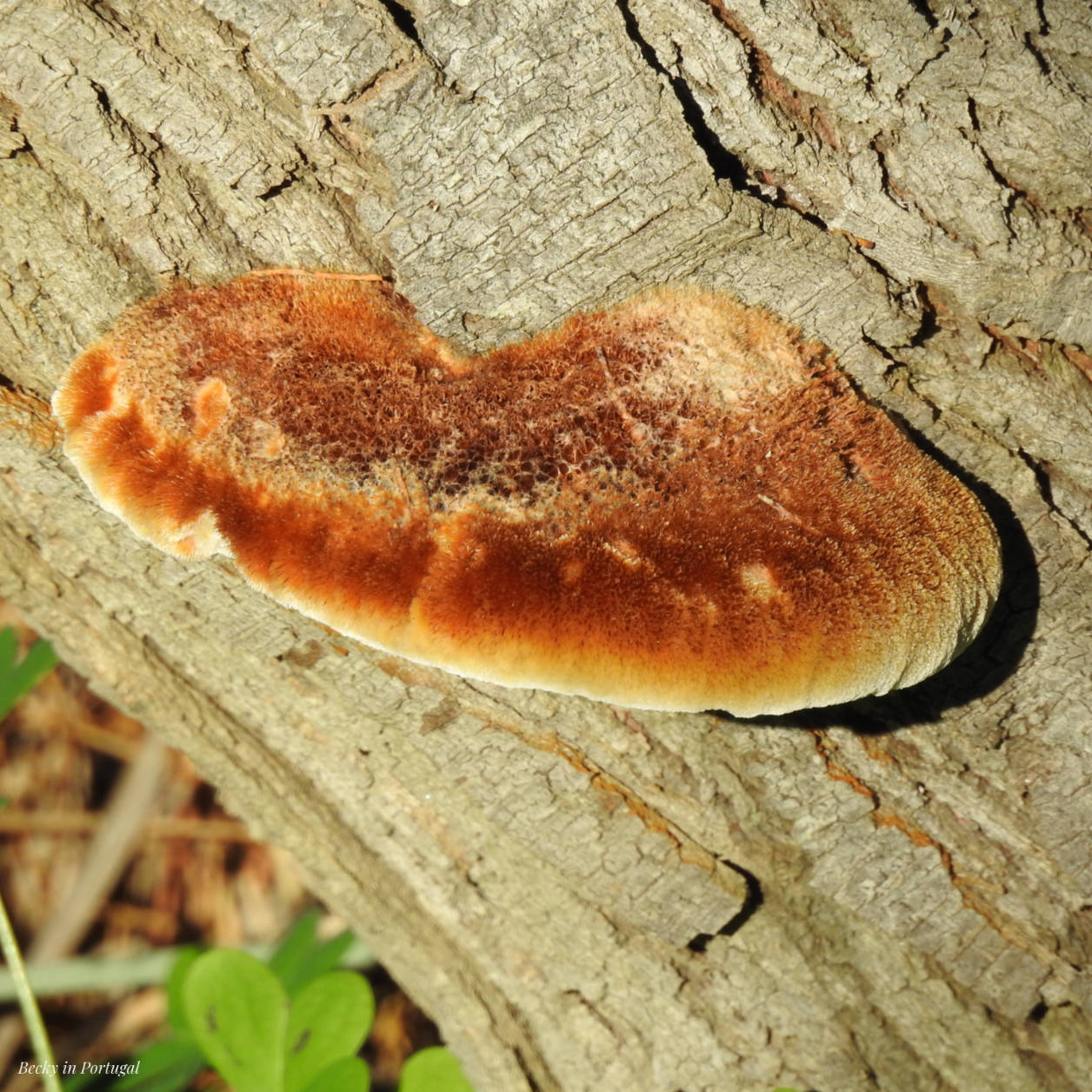

They don’t just add colour to the landscape or act as an environmental guide; they’re also food for animals, nesting material for birds, homes for insects, and scenery for model railways. Some lichens also make great natural dyes, perfumes and even medicine.
The world needs lichen!
 The life of B
Thanks for the lesson on lichen. I love photographing it but it never occurred to me that there was more than one variety.
LikeLiked by 1 person
Likewise!
LikeLiked by 1 person
Nature provides some oddities for sure, Becky. As a kid, I remember a story told by a ranger-naturalist as he was explaining lichen. He said algae and fungus got together and took a “lichen” to each other. Hahaha!
LikeLiked by 1 person
oh that’s brilliant. I won’t forget now!
LikeLiked by 1 person
I didn’t know that either – interesting!
LikeLiked by 1 person
amazing what one discovers when preparing a post!
LikeLiked by 1 person
Oh I learned something today. I knew lichen grew slowly. So thanks for the lichen lesson. 😀
Here is my odd entry for the day.
LikeLiked by 1 person
Thank goodness for the internet which makes research easy!
LikeLike
Yes…. ;D 😀
LikeLiked by 1 person
They certainly add color and beauty, don’t they? I may not know what sort they are, but when I see them, I’m lichen ’em. 🙂 Okay, enough of that. It’s off to the kitchen for me today: https://sustainabilitea.wordpress.com/2022/02/12/if-you-cant-take-the-heat/
janet
LikeLiked by 1 person
hee hee, I lichen them too!
LikeLiked by 1 person
Interesting stuff, Becky. I didn’t know any of that! I love the weathered look they give to pretty much everything they grow on. Here’s mine today: https://grahamsisland.com/2022/02/12/ufo/
LikeLiked by 1 person
I love that effect too 🙂 and like you only learnt much of this because of this post!
LikeLiked by 1 person
Beautiful lichens and very interesting report !
This is mine from India:
https://wanderlustig2019.wordpress.com/2022/02/12/odd-encounter-in-india/
LikeLiked by 1 person
oh I am so glad you have enjoyed it 🙂
LikeLike
Very interesting – I never knew! 😮
LikeLiked by 1 person
Neither did I until I came to write this post!!
LikeLiked by 1 person
Lots of lichens down here and lots of clean air (until all the cars arrive at Easter time…) I love finding them. You may remember this post from 2015 about lichens:
LikeLiked by 1 person
they’ve already begun arriving for half term!! fortunately though most of them don’t leave the coastal areas
LikeLike
ah just realised you said here as in Cornwall not here as in Portugal!!!
LikeLike
Hahaha.. yes. I don’t suppose your tourists bring their cars.
LikeLiked by 1 person
huge number of hire cars, but they all head west!
LikeLike
Your lichen post is so lovely. I didn’t see it in 2015. So fabulous to be able to enjoy it this evening
LikeLike
Lovely collection of Lichens.
To be precise, it’s presence is ignored.
Thank you Becky for the rich information.
LikeLiked by 1 person
so glad you enjoyed 🙂
LikeLiked by 1 person
I suppose it’s a bit like moss then, Becky… apparently that’s two organisms as well.
I’ve used my nODDle today: https://wp.me/pVkLb-5Lp
And I have some information about gargoyles here: https://wp.me/pVkLb-5Lk
Quite a productive morning so far. Most odd! 😀
LikeLiked by 1 person
Really? Moss is too – oh my. What strange and fascinating things I am learning today 🙂
LikeLiked by 1 person
I believe so… and my recent square of moss in close-up (the creepy-crawly hands!) appears to show more than one plant… I could be totally wrong, though!
LikeLiked by 1 person
if I have them in my dreams tonight you will be in trouble!!
LikeLiked by 1 person
No creepy-crawly hands then? 😉
LikeLiked by 1 person
Fortunately not!
LikeLiked by 1 person
😀😁🖐👍🤣
LikeLike
Don’t we all “love the lack of development as well as the fresh air and sunshine?” 🙂
LikeLiked by 1 person
Well some of us do, not sure everyone looking at the amount of development here in Olhao, and also back home in Winchester!!
LikeLike
That’s progress. Or maybe entertainment.
LikeLiked by 1 person